
Karl Lagerfeld’s 15 Most Incredible Chanel Shows
Images via Getty Images, CHANEL
At Chanel, Karl Lagerfeld turned runways into unforgettable worlds. These 15 shows capture the moments when his vision reshaped fashion history.
When Karl Lagerfeld took over Chanel in 1983, he inherited a house built on radical simplicity. Gabrielle Chanel had reshaped fashion by stripping away excess and redefining modern chic. Lagerfeld did not undo that foundation. Instead, he expanded it into something cinematic. What many people forget now is how deeply involved he was in every detail of those productions. He did not simply approve a theme and step away. He sketched the sets himself. He dictated proportions. He adjusted lighting concepts. He was known to review architectural models and demand structural changes days before installation.
By the time the shows moved permanently into the Grand Palais, each production required months of planning and teams of engineers, carpenters, lighting designers, and artisans. Yet the vision almost always began with one of Lagerfeld’s rapid black and white sketches. He understood how a runway image would read in photographs before a single beam was installed. He considered camera angles, sightlines, pacing, and even the soundscape. He treated each show like a film director preparing a set, obsessing over atmosphere as much as garments.
We are celebrating 15 shows here not simply because they were grand, but because they reveal how carefully constructed his world building truly was. Beneath the spectacle was precision. Beneath the fantasy was structure. These are our favorite fifteen because they demonstrate how Lagerfeld balanced heritage with scale, and craftsmanship with cultural commentary.
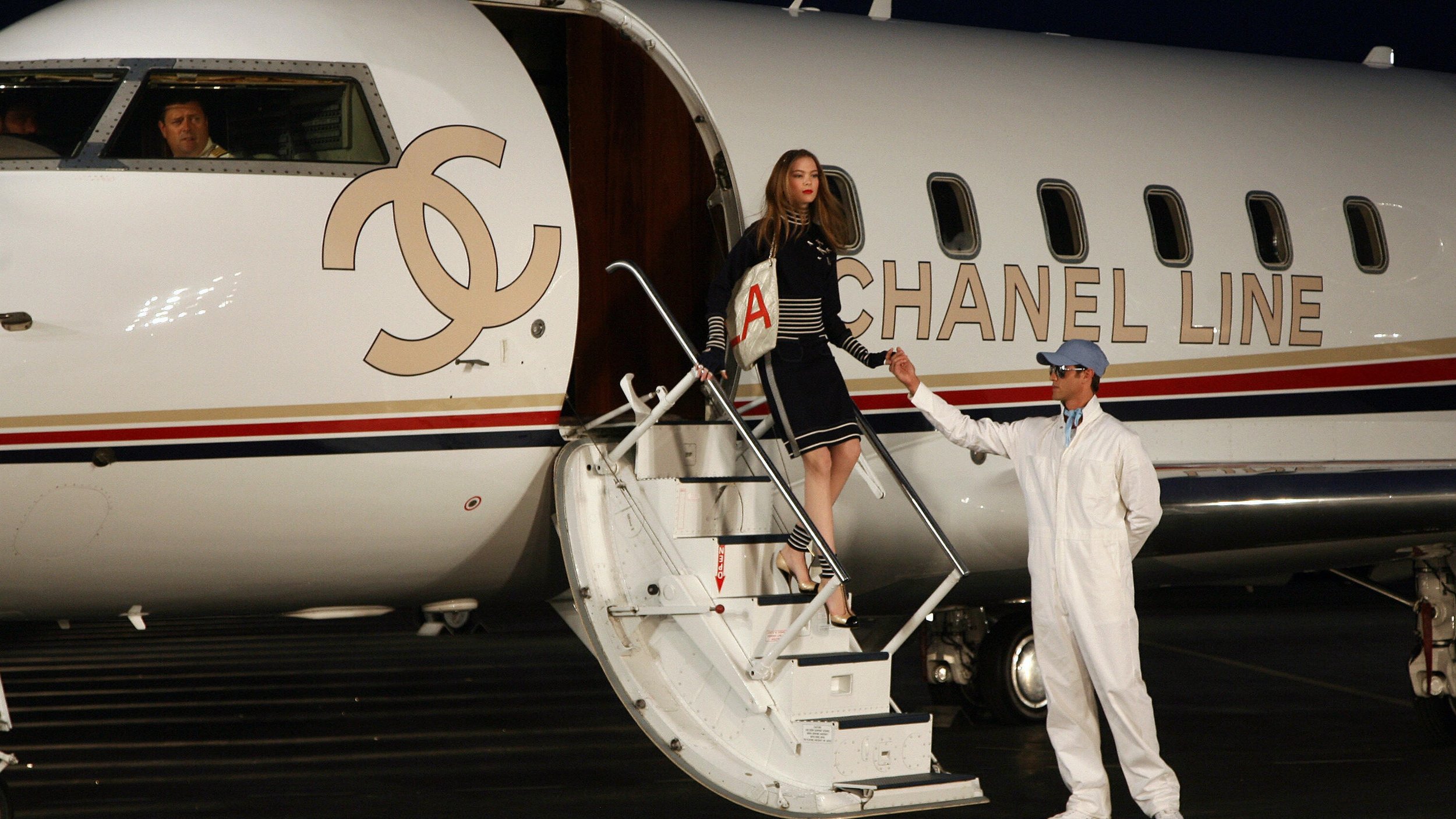
Cruise 2007: The Airplane Hangar
This was one of the early moments when Lagerfeld made it clear that Cruise was not a secondary collection. He staged the show inside an airplane hangar built around a Chanel branded private jet. It felt aspirational in a very direct way. Chanel was not just something you wore. It was a lifestyle in motion. What many people do not realize is that this was years before social media made airport fashion a spectacle. He anticipated the obsession with travel dressing long before it became a thing.
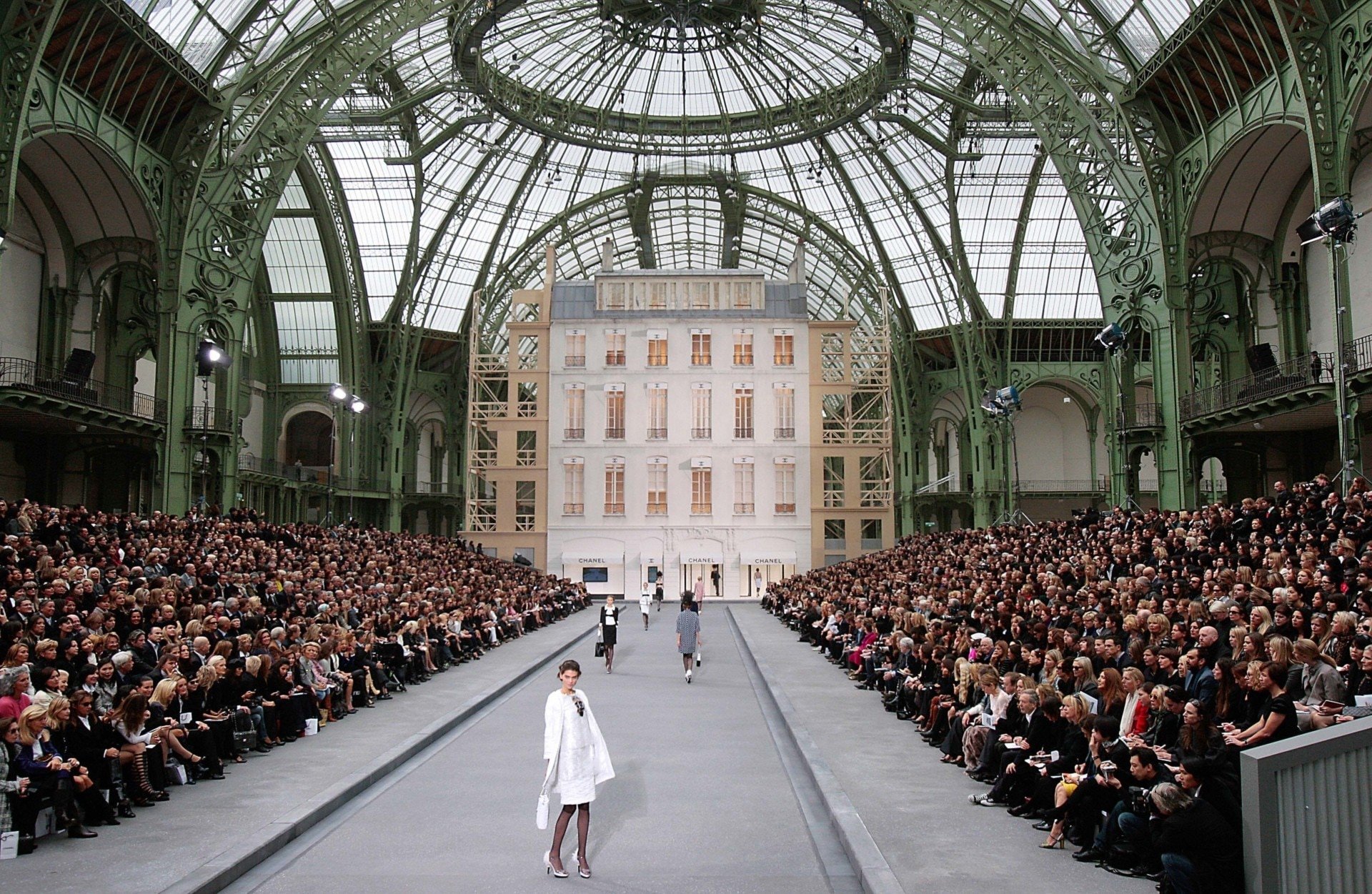
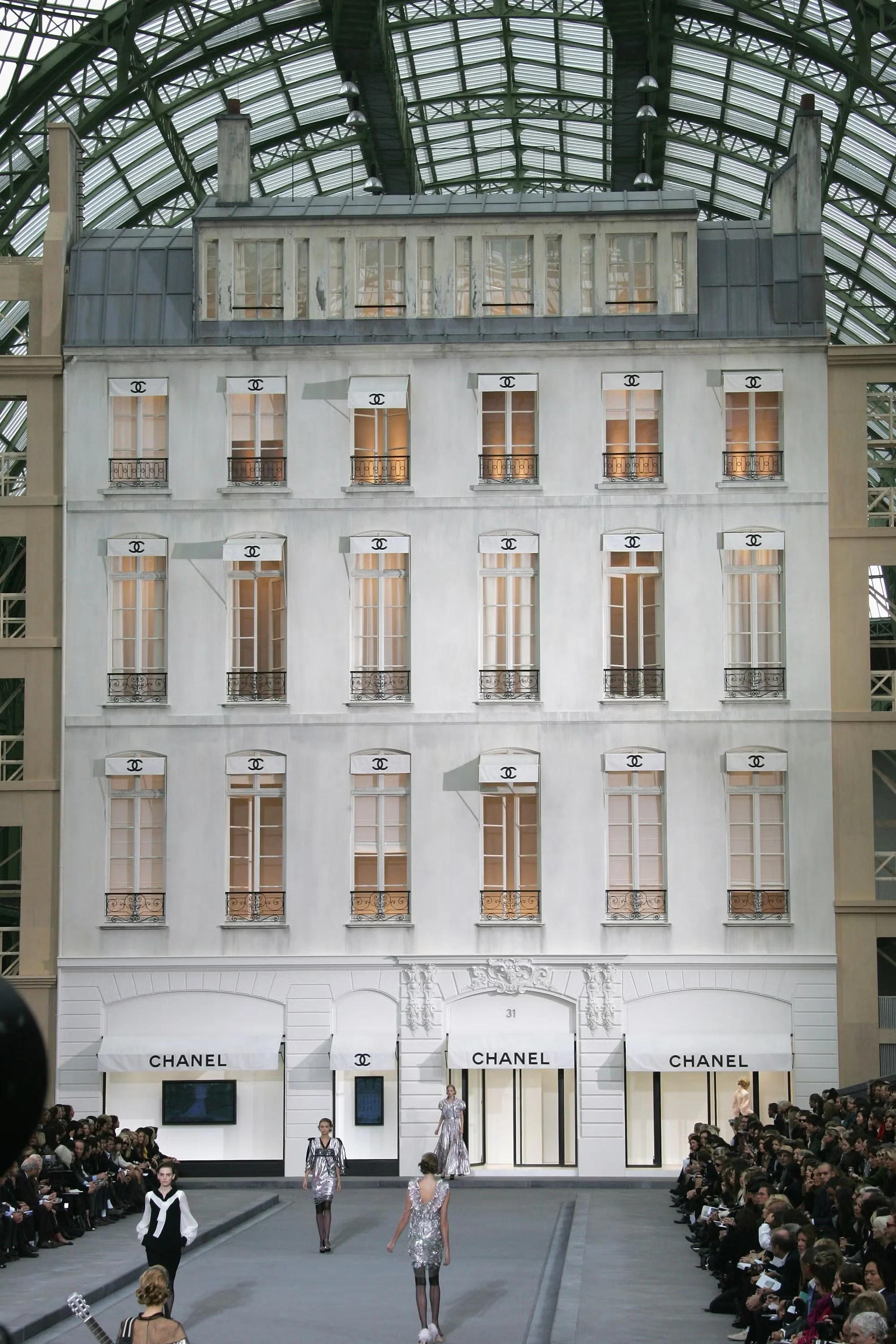
Spring/Summer 2009 Ready to Wear: The 21 Rue Cambon Storefront
Instead of fantasy, Lagerfeld turned inward. He rebuilt the façade of 21 Rue Cambon inside the Grand Palais. It was romantic and almost reverent. The mirrored staircase was a quiet reference to Gabrielle Chanel herself, who used to watch her shows from above without being seen. What we love about this one is how confident it felt. No gimmick. Just heritage, scaled up to cathedral size.
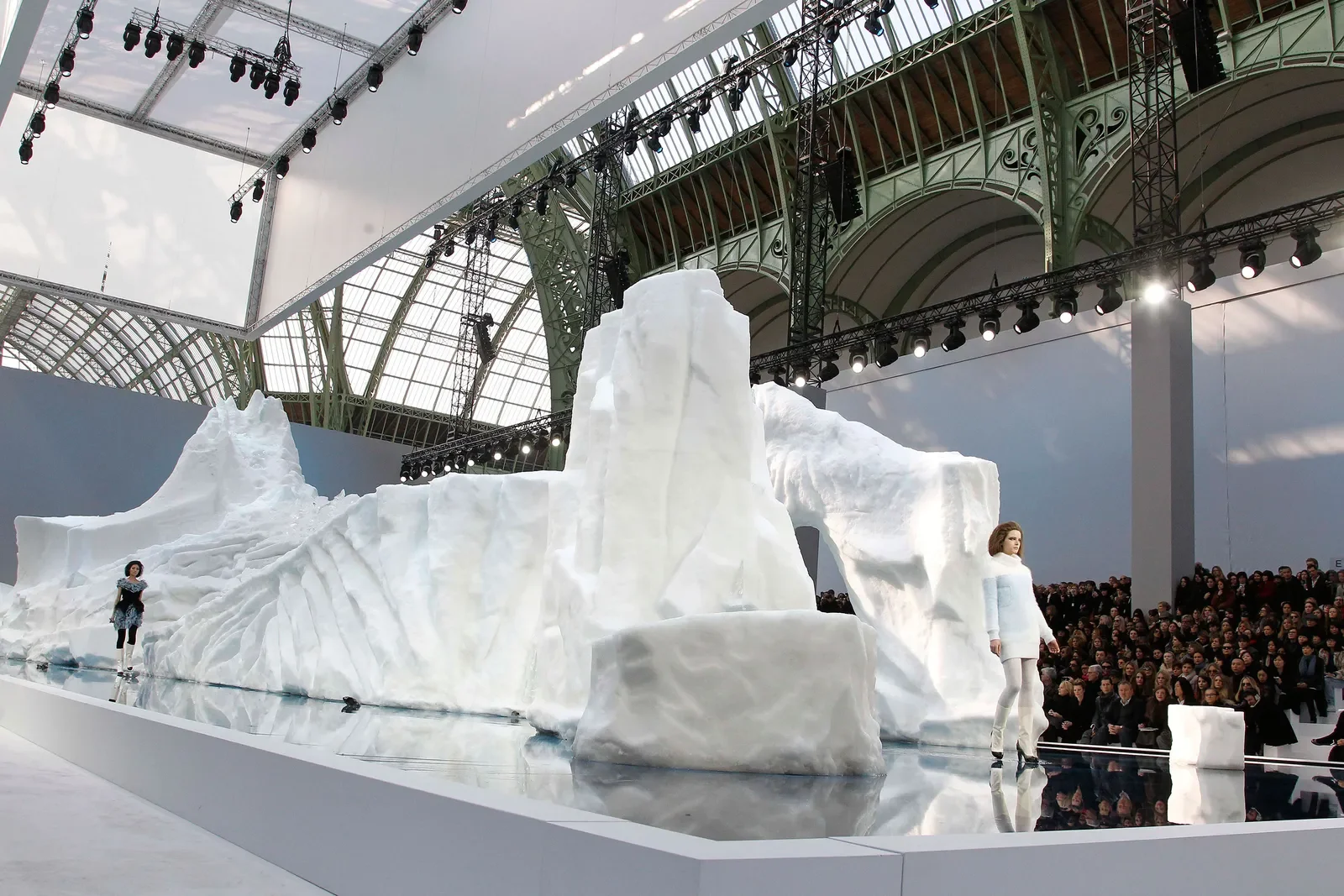
Fall/Winter 2010 Ready to Wear: The Iceberg
Two hundred and forty tons of ice were shipped from Scandinavia and installed under the glass dome. You could hear it crack as models walked. That detail still gives it an eerie beauty. What most people forget is that the ice was reused after the show. It was not simply melted away. The collection itself leaned into heavy textures and fur boots, almost echoing survival in extreme climates. It felt dramatic, but also strangely quiet.
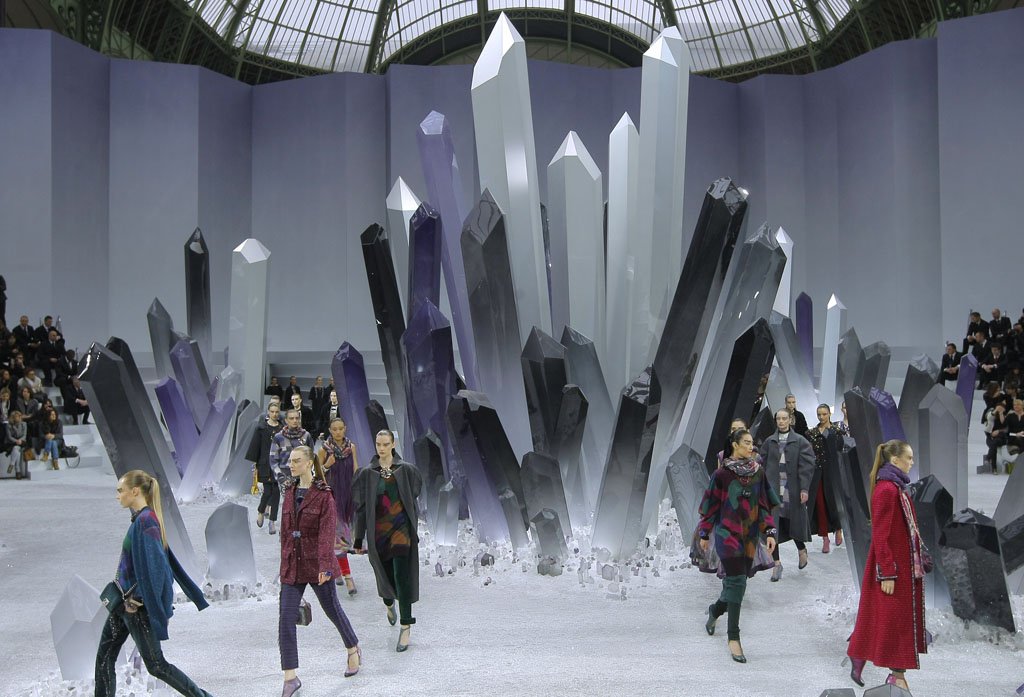
Fall/Winter 2012 Ready-to-Wear: The Crystal Installation
The crystal formation rising from the center of the runway felt futuristic and sharp. It was less romantic and more architectural. The embroidery in the collection mirrored the fractured surfaces of minerals. Couture is often associated with softness, but this felt structured and powerful. The unexpected detail was how technical the installation was. It had to be engineered in sections and assembled inside the venue, like a sculpture entering a museum.
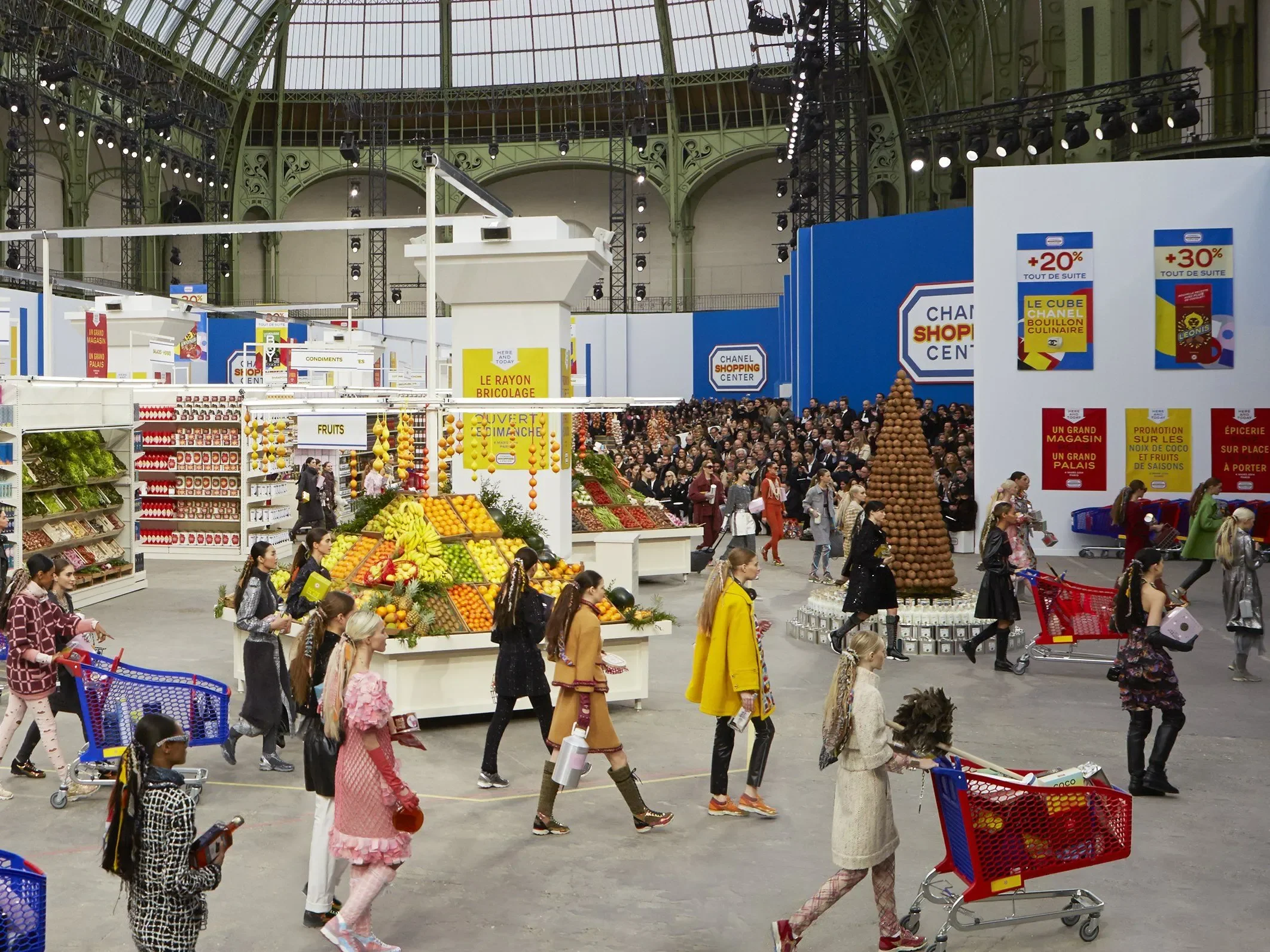
Spring/Summer 2014 Ready to Wear: The Supermarket
This one remains unforgettable. Chanel branded pasta, cleaning products, cereal boxes. More than five hundred custom items were produced just for the show. Afterward, guests were allowed to take some home, which is why original pieces still surface in resale markets. It was funny, yes, but it was also sharp commentary. Lagerfeld understood branding better than most executives. He turned the idea of consumption into spectacle.
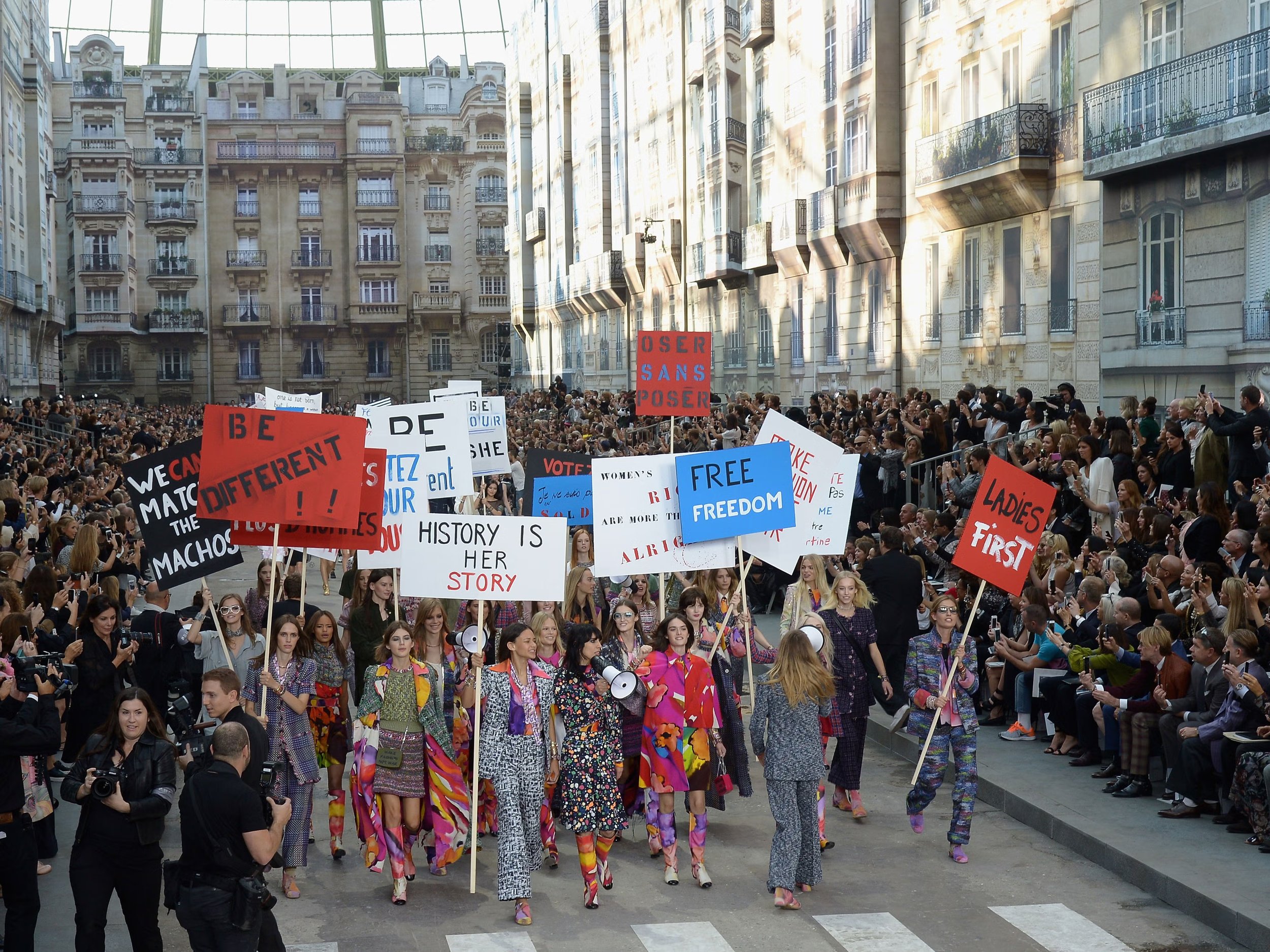
Fall/Winter 2014 Ready to Wear: The Feminist March
Models walked carrying protest signs. Cara Delevingne led the finale. It was theatrical and controversial in equal measure. What made it memorable was the tension. Chanel has always represented independence, and this show leaned into that legacy. Many of the slogans were reportedly written by Lagerfeld himself. It blurred the line between runway and rally.
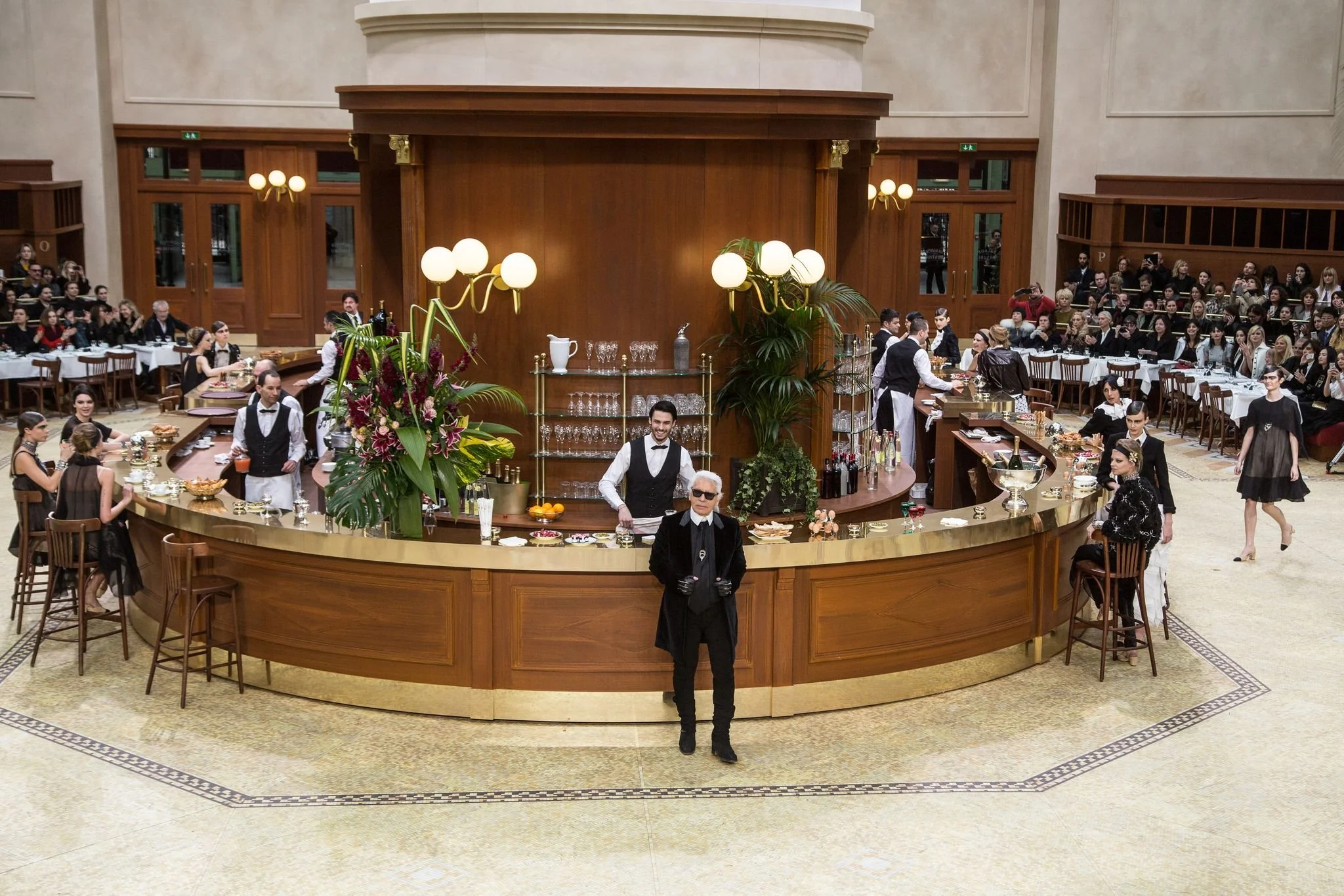
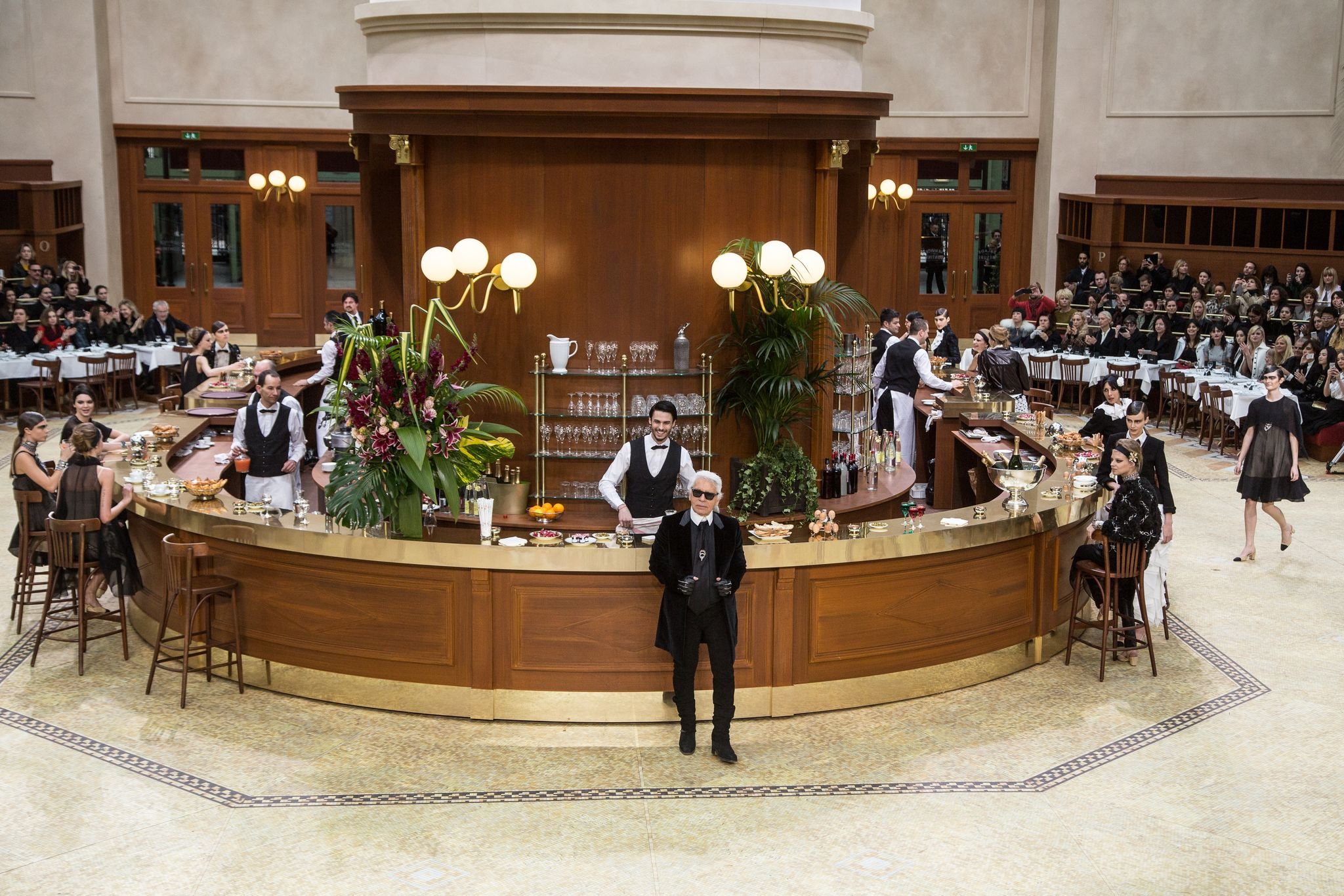
Spring Summer 2015 Ready to Wear The Brasserie
A full Parisian café appeared inside the Grand Palais. Models sat at marble tables, editors mingled, waiters served drinks. It felt like stumbling into a real Left Bank afternoon. What made it iconic was how relaxed it looked despite the scale of the production. It captured everyday Paris chic, elevated but effortless.
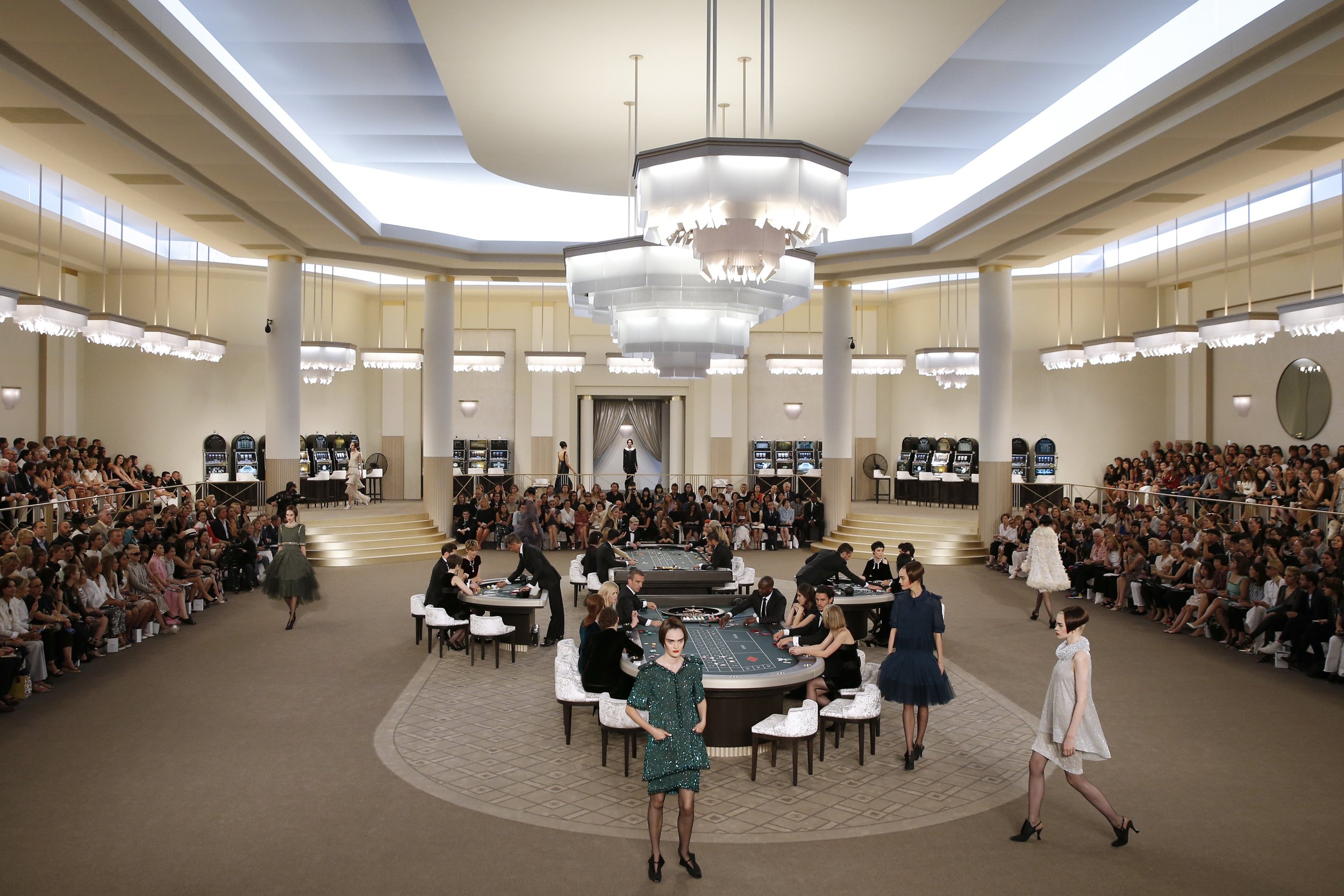
Haute Couture Fall/Winter 2015: The Casino
For couture, he built a functioning casino called Cercle Privé. Real roulette tables. Real dealers. Kristen Stewart and Julianne Moore were seated at the tables as part of the scene. It felt intimate and exclusive, like stepping into a private club. The clever detail was how models wove between guests, turning the audience into part of the set.
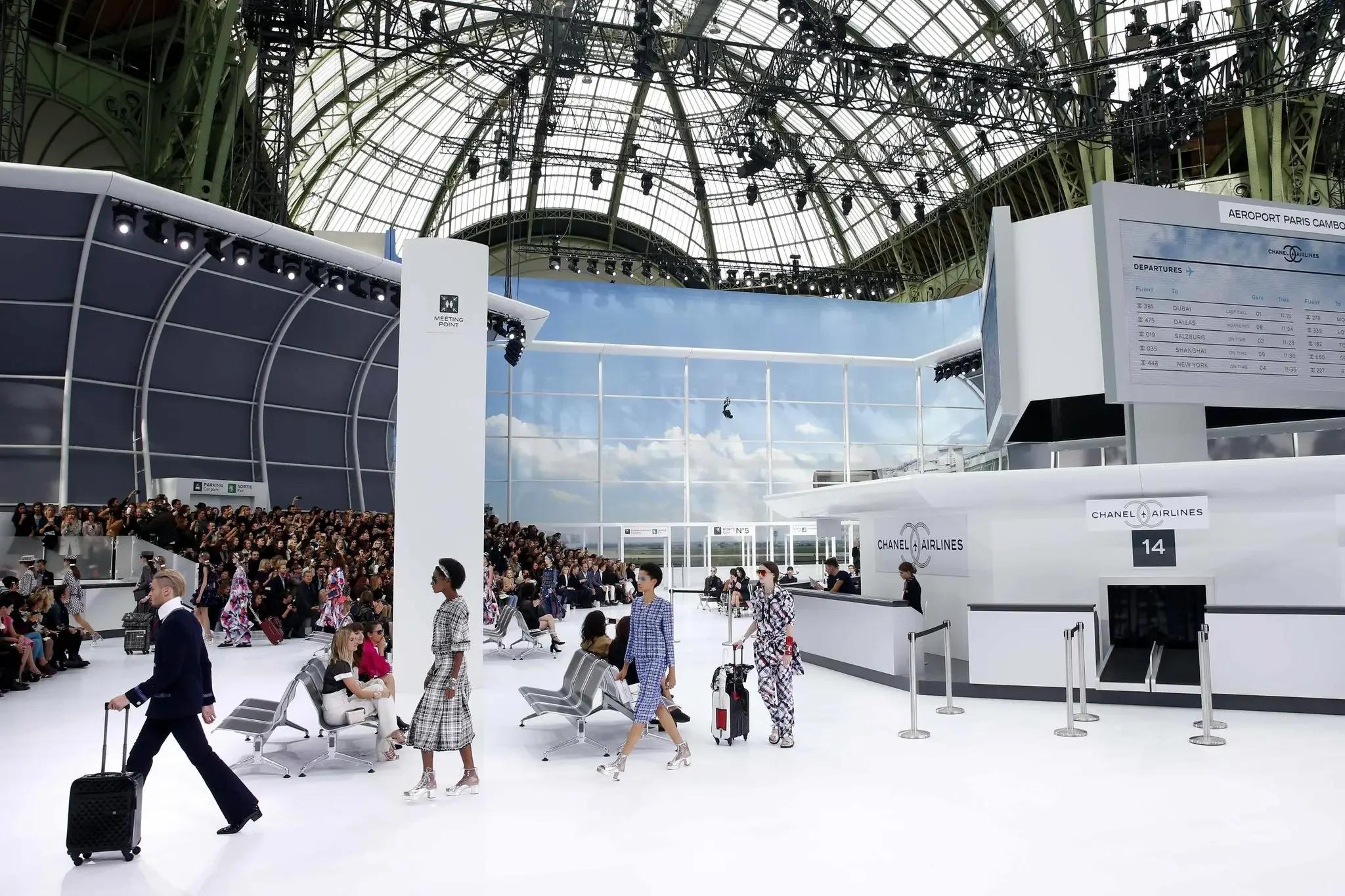
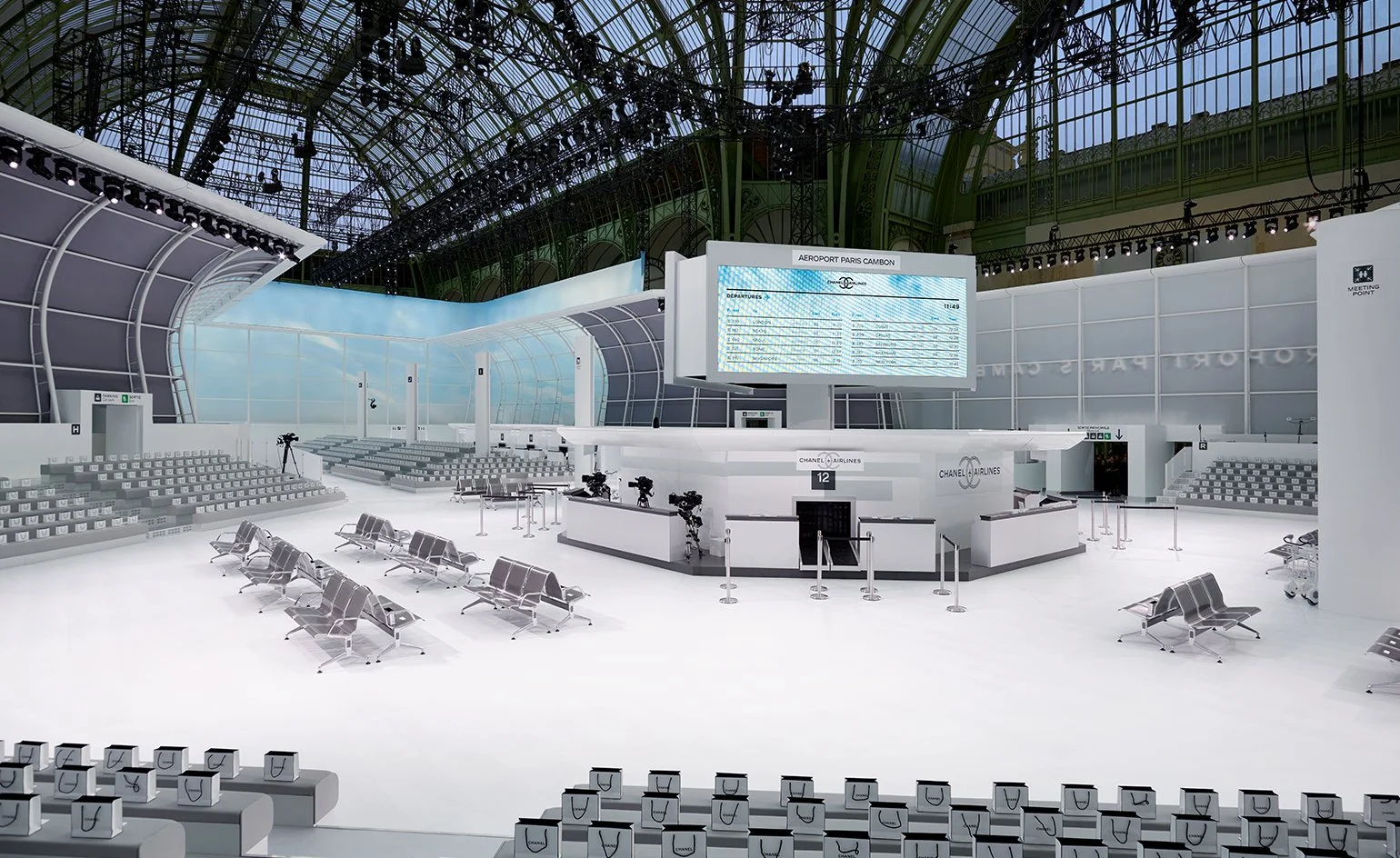
Spring/Summer 2016 Ready to Wear: Chanel Airlines
The Grand Palais became an airport terminal with boarding passes and check in counters. The humor was subtle. Tweed flight attendants and travel ready silhouettes played into the theme. What we love about this show is how playful it was. It acknowledged that fashion week itself is a cycle of constant travel.
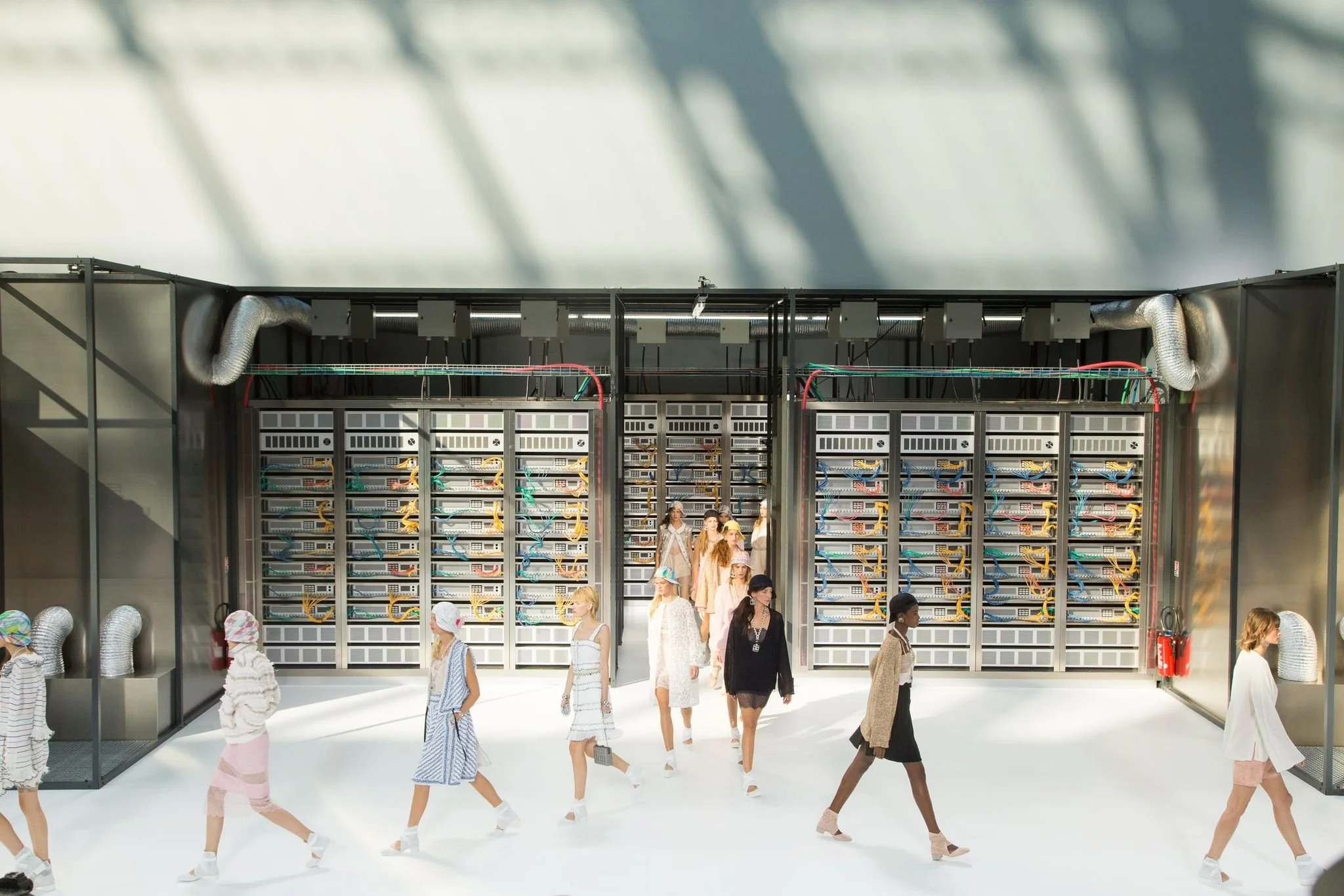
Spring/Summer 2017 Ready to Wear: The Data Center
This was Lagerfeld’s take on the digital age. Towering server racks and colored cables lined the space. Robot figures in tweed opened the show. It could have felt gimmicky, but instead it felt oddly prophetic. Fashion was becoming inseparable from technology and image sharing. He staged that reality before most brands openly embraced it.
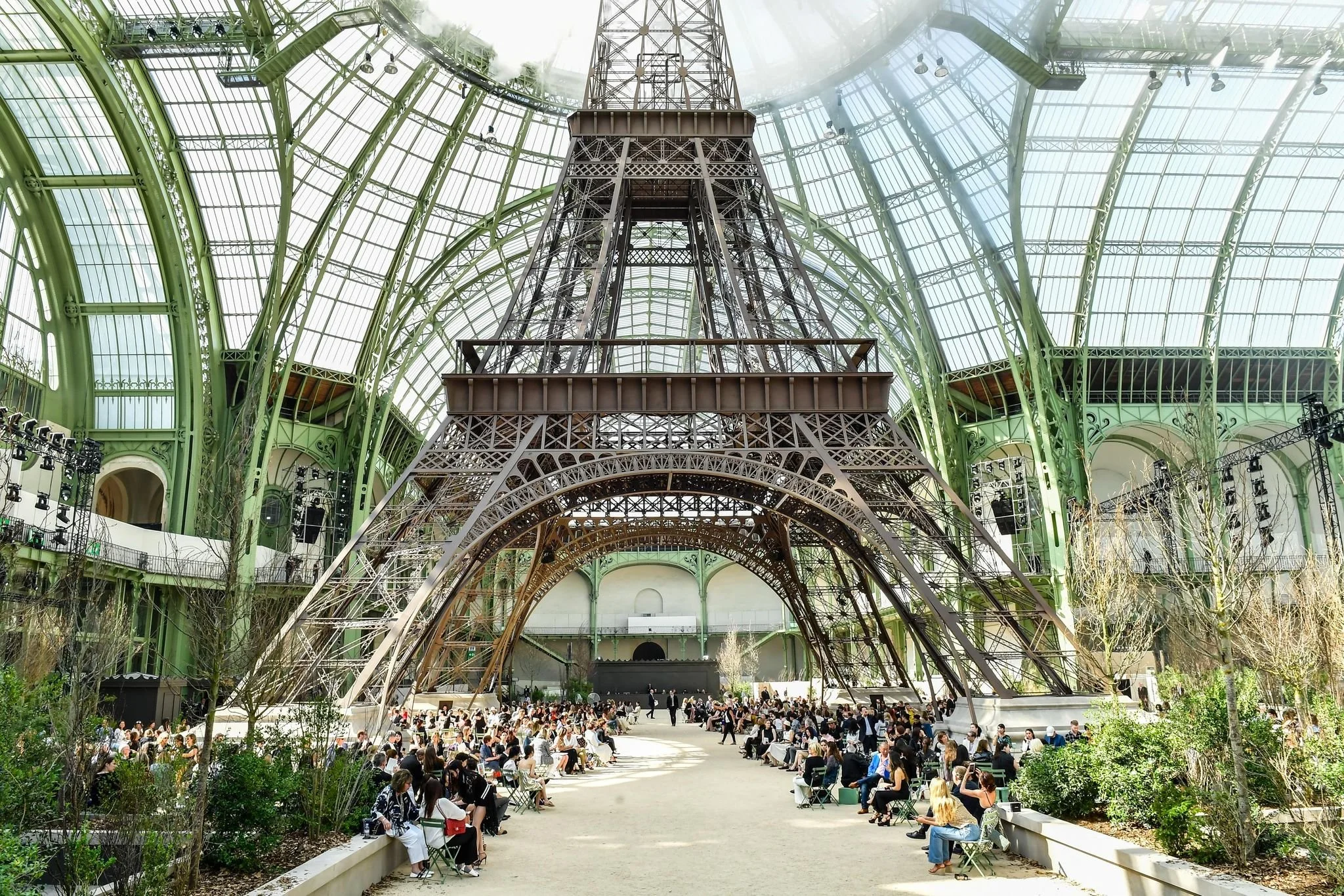
Haute Couture Autumn/Winter 2017: The Eiffel Tower
A replica of the Eiffel Tower rose inside the Grand Palais. It was dramatic, yes, but also deeply Parisian. Couture and the city were inseparable. What made it special was the lighting. As the show progressed, the tower shimmered like it does at night in real life. It felt less like a set and more like a love letter.
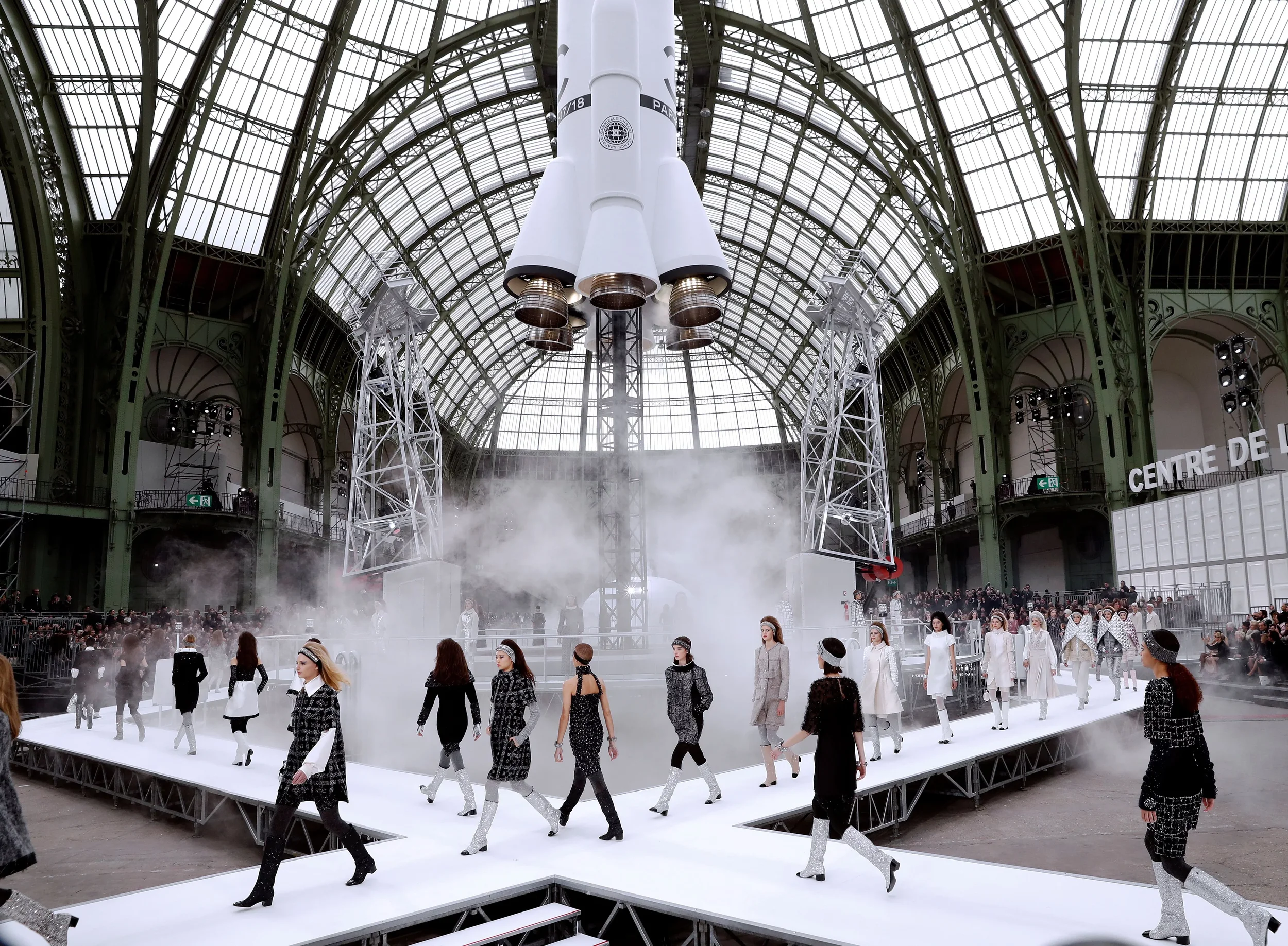
Fall/Winter 2017 Ready to Wear: The Rocket
A 115 foot towering rocket stood at the center of the runway and appeared to launch at the finale. Smoke filled the space. The image traveled around the world within minutes. What people rarely consider is how carefully timed that moment was for maximum photographic impact. It was designed for instant circulation.
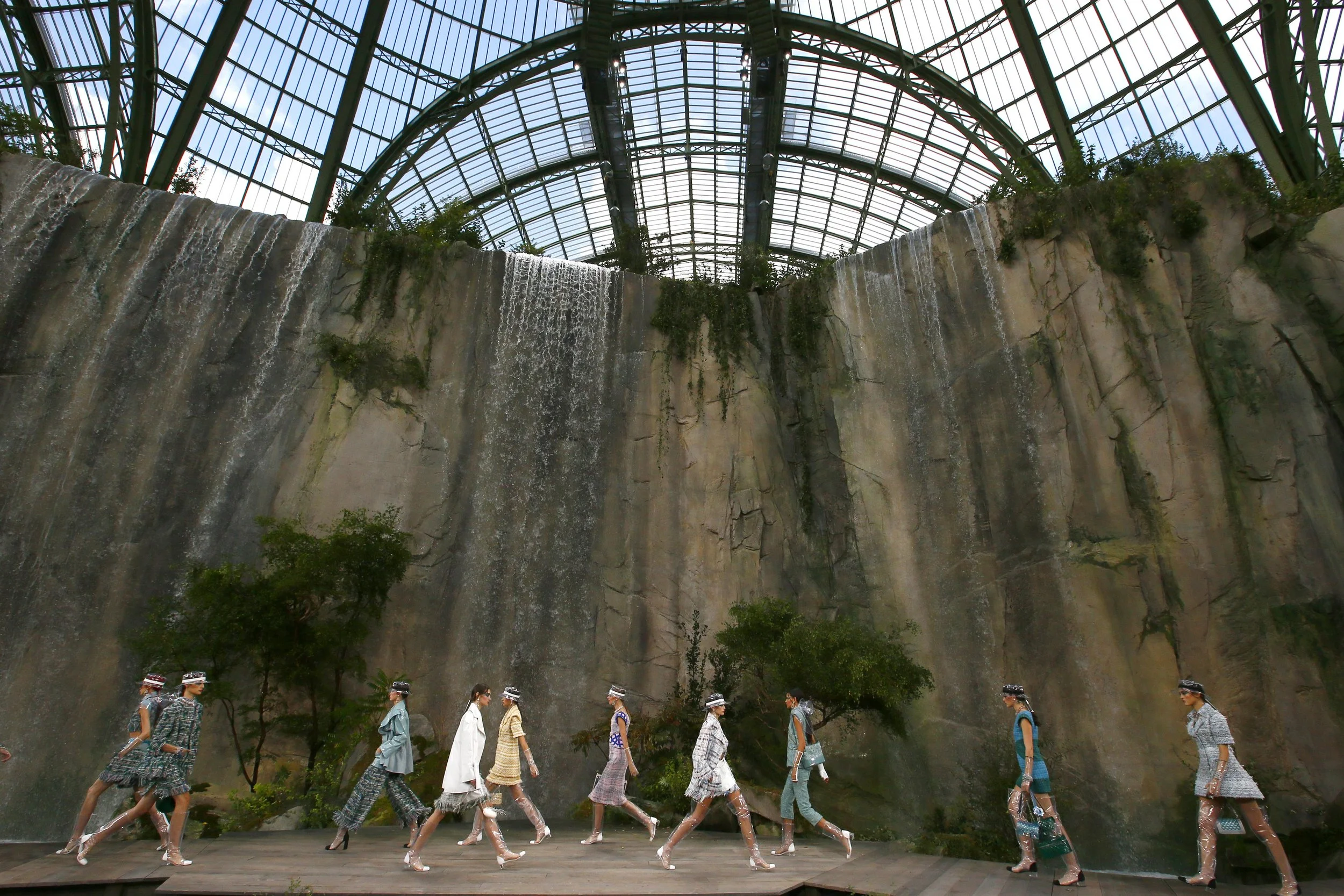
Spring/Summer 2018 Ready to Wear: The Waterfall
Lagerfeld transformed the Grand Palais into a dramatic landscape inspired by the Verdon Gorge in the South of France, complete with towering cliffs and a functioning waterfall roughly thirty feet high. You could hear the water rushing. Many of the looks referenced that idea through PVC rainwear, clear plastic accessories, and rain-ready pieces. It felt immersive and calming at the same time, an unexpected balance.
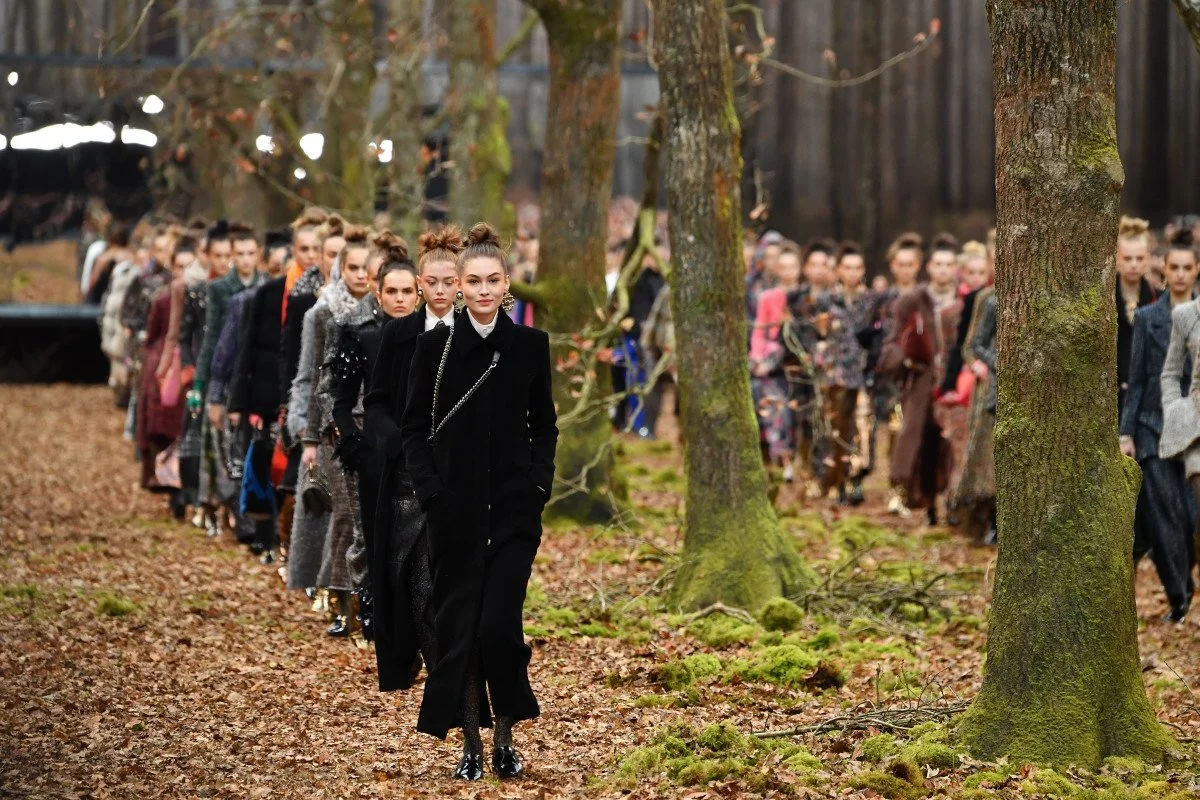
Fall/Winter 2018 Ready to Wear: The Forest
Karl Lagerfeld transformed the Grand Palais into a life-sized forest with around 20 real oak and poplar trees lining the runway. The runway floor was carpeted with damp mossy leaves. Lagerfeld said he had always loved autumn and referred to the setting as an Indian summer mood, echoing memories of walking through forests in his youth. The contrast between raw nature and polished tailoring made the clothes feel even sharper. It was grounded and atmospheric.
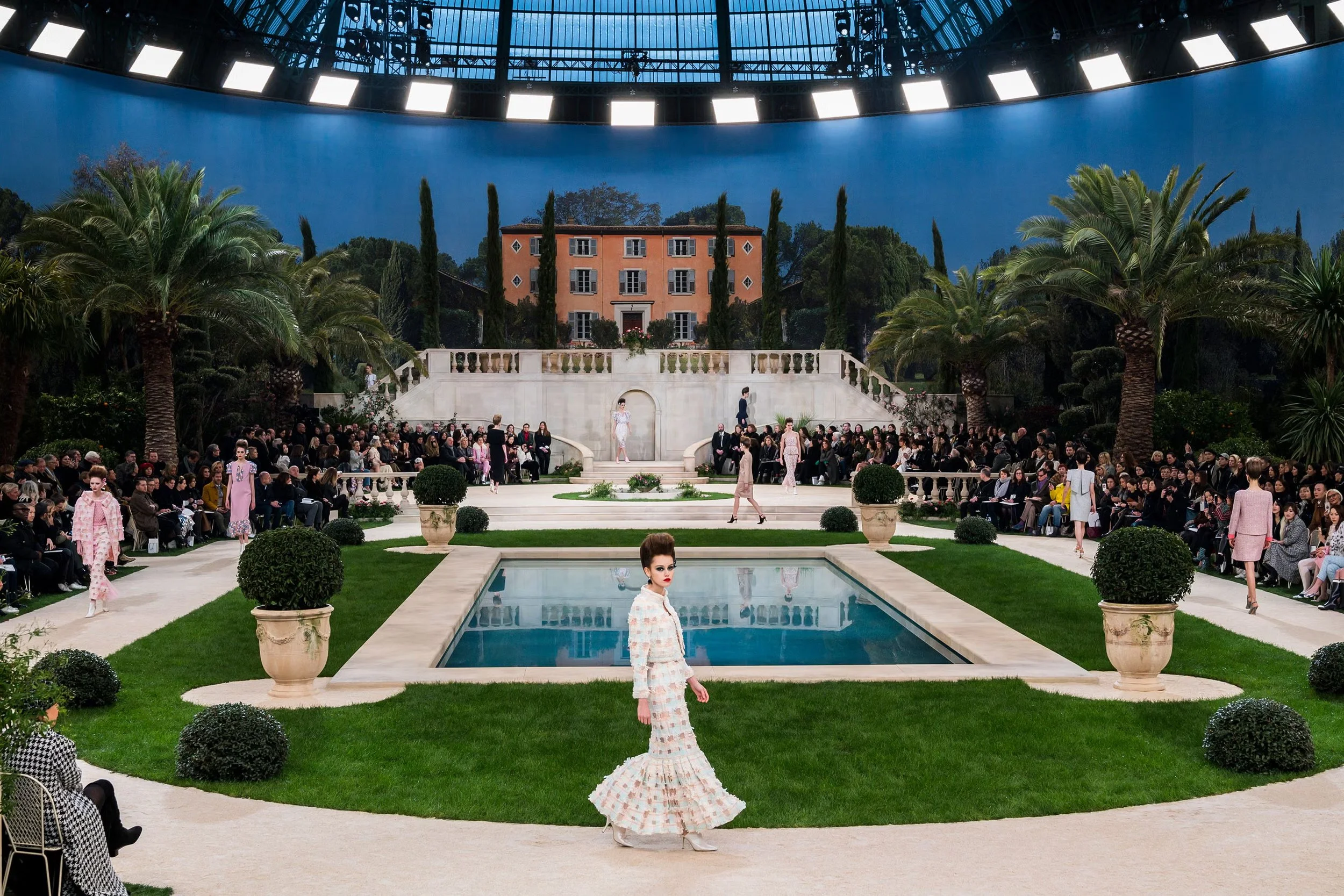
Haute Couture Spring/Summer 2019: The Mediterranean Villa
The Grand Palais was transformed into a sunlit villa courtyard inspired by the South of France. It felt serene and cinematic. Lagerfeld and his couture artisans incorporated an extraordinary level of craftsmanship, including hand-embroidered flowers by Lesage, ceramic and resin floral details, and feathers that added dimension and texture to pieces. What made it poignant in hindsight is that it was one of the last couture shows under Lagerfeld’s direction. There was a softness to it, almost reflective.
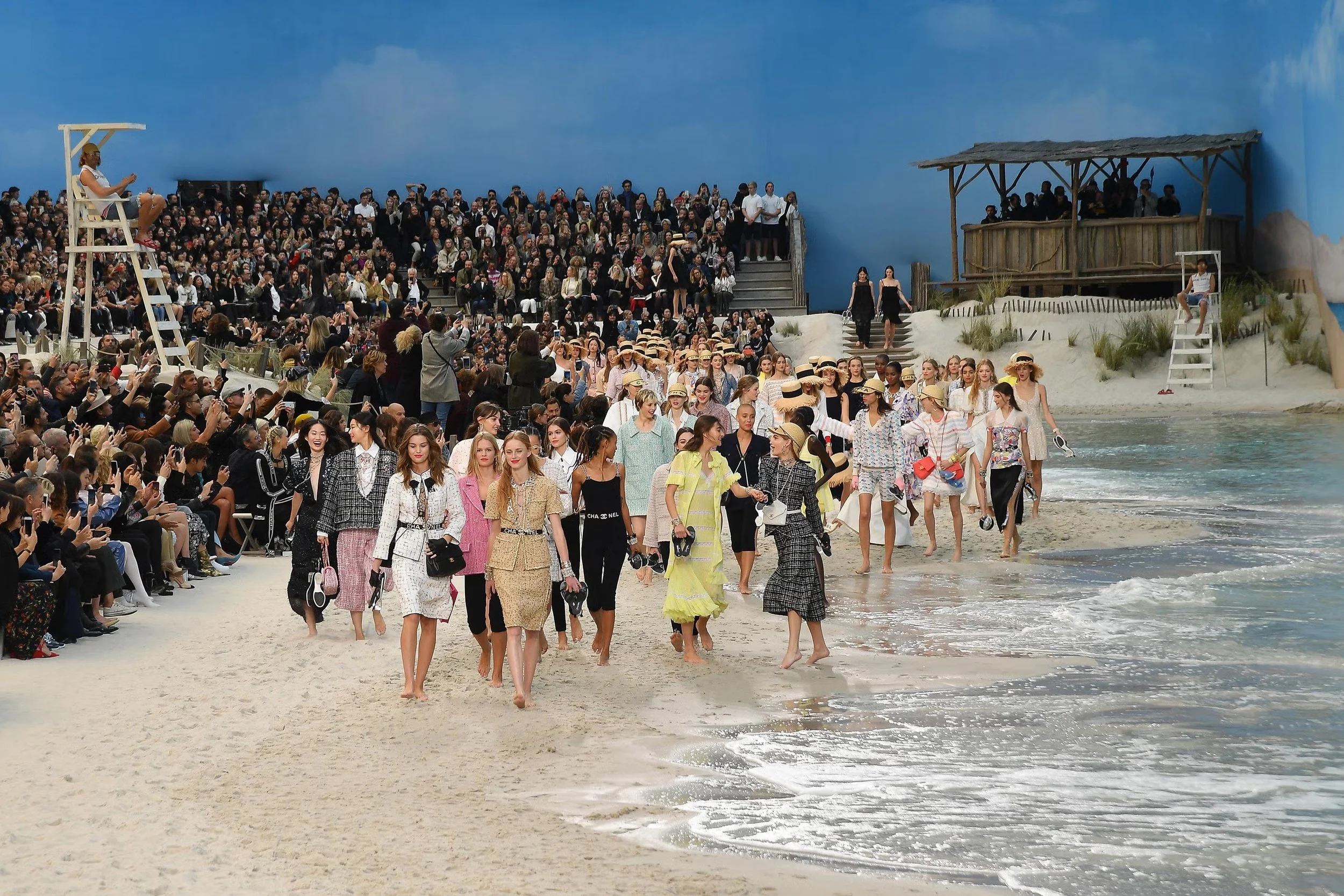
Spring/Summer 2019 Ready to Wear: The Beach
Presented just months before Karl Lagerfeld’s passing, sand covered the floor. at the Grand Palais. The “sea” was a custom built wave machine installed inside the venue. Engineers had to calculate water movement carefully so the tide looked natural but did not splash too far onto the sand or affect the garments. The sand itself had to be treated so it would not cling excessively to tweed and silk. Even the lighting was adjusted to mimic late afternoon. Models walked barefoot, carrying their shoes.
From Rue Cambon to rocket launches, from server rooms to seaside escapes, these fifteen shows reveal how involved Lagerfeld truly was in shaping every detail. He did not simply design collections. He built worlds, and in doing so, he permanently altered the scale and ambition of the modern fashion show.