
The Enduring Legacy of Bob Mackie
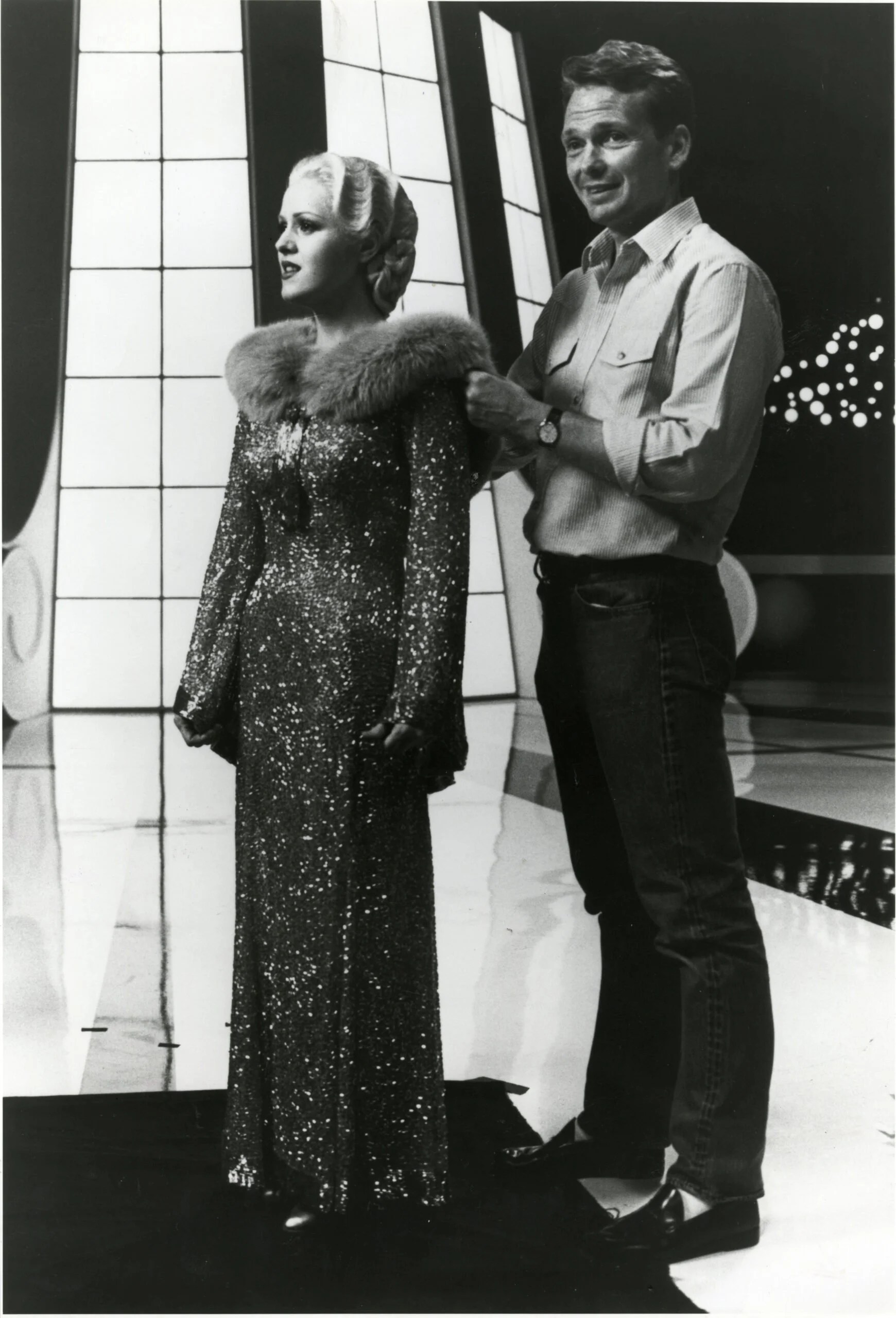
Images via Bob Mackie, Getty
Bob Mackie has died at 87, leaving behind six decades of unforgettable work. His influence changed how generations of stars dressed and performed.
Bob Mackie, the legendary American designer whose work helped shape more than six decades of Hollywood and popular culture, has died at 87. His team announced his death on September 14, sharing that Mackie had lived his 87 years to the fullest and fulfilled the dream he carried throughout his life: simply to be a designer. Born in Monterey Park, California, in 1939, Mackie grew up fascinated by the movies, building miniature sets on top of his dresser and making paper clothes for the tiny stars who inhabited them. After studying at Pasadena City College and the Chouinard Art Institute in Los Angeles, he entered the industry as a young sketch artist, drawing for legendary Hollywood costume designers including Edith Head and Jean Louis. One of his earliest assignments would eventually become one of the most famous dresses in American history: while working for Jean Louis, Mackie drew the original sketch for the sheer, rhinestone-covered dress Marilyn Monroe wore while singing “Happy Birthday” to President John F. Kennedy in 1962. He was still at the beginning of his career, but the moment now feels like an unusually fitting introduction to everything that would follow.
Television quickly became central to Mackie’s career. Working alongside costume designer and longtime partner Ray Aghayan, he entered the medium at a moment when variety shows were major cultural events, eventually sharing the first Emmy awarded specifically for costume design for Alice Through the Looking Glass in 1967. Soon came Mitzi Gaynor and Carol Burnett, with Mackie designing the wardrobe for The Carol Burnett Show throughout its entire 11-year run. It was there that another side of his talent became obvious: Mackie was extremely funny. He understood that clothes could deliver a joke before an actor even spoke. For Burnett’s famous 1976 “Went with the Wind” parody, Mackie transformed green drapery into a dress but deliberately left the curtain rod running across her shoulders. The audience erupted the moment Burnett descended the stairs, and the costume eventually entered the Smithsonian’s National Museum of American History. Mackie could make someone look beautiful, completely ridiculous or somehow both at once, and he approached each with the same precision.
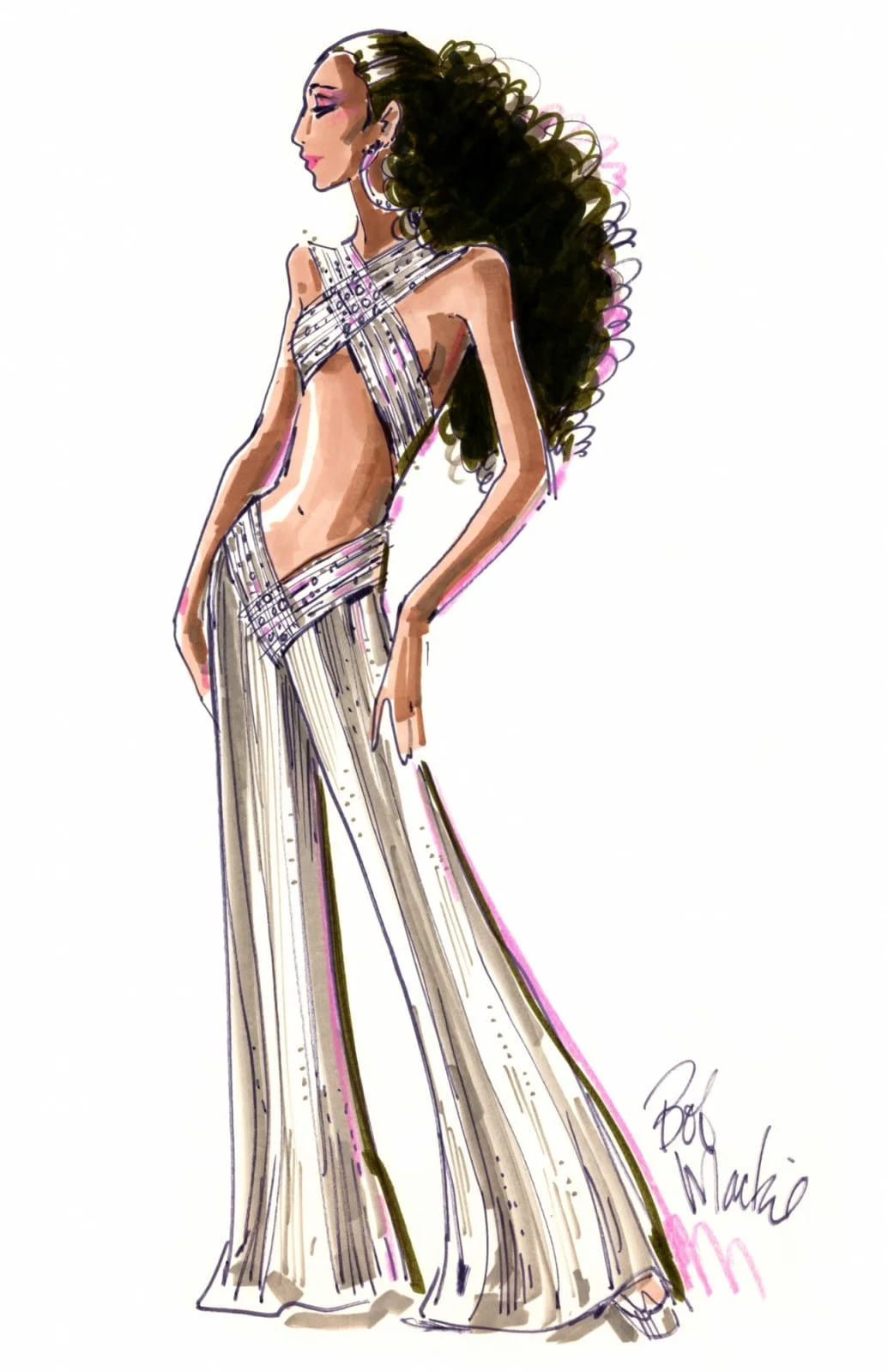
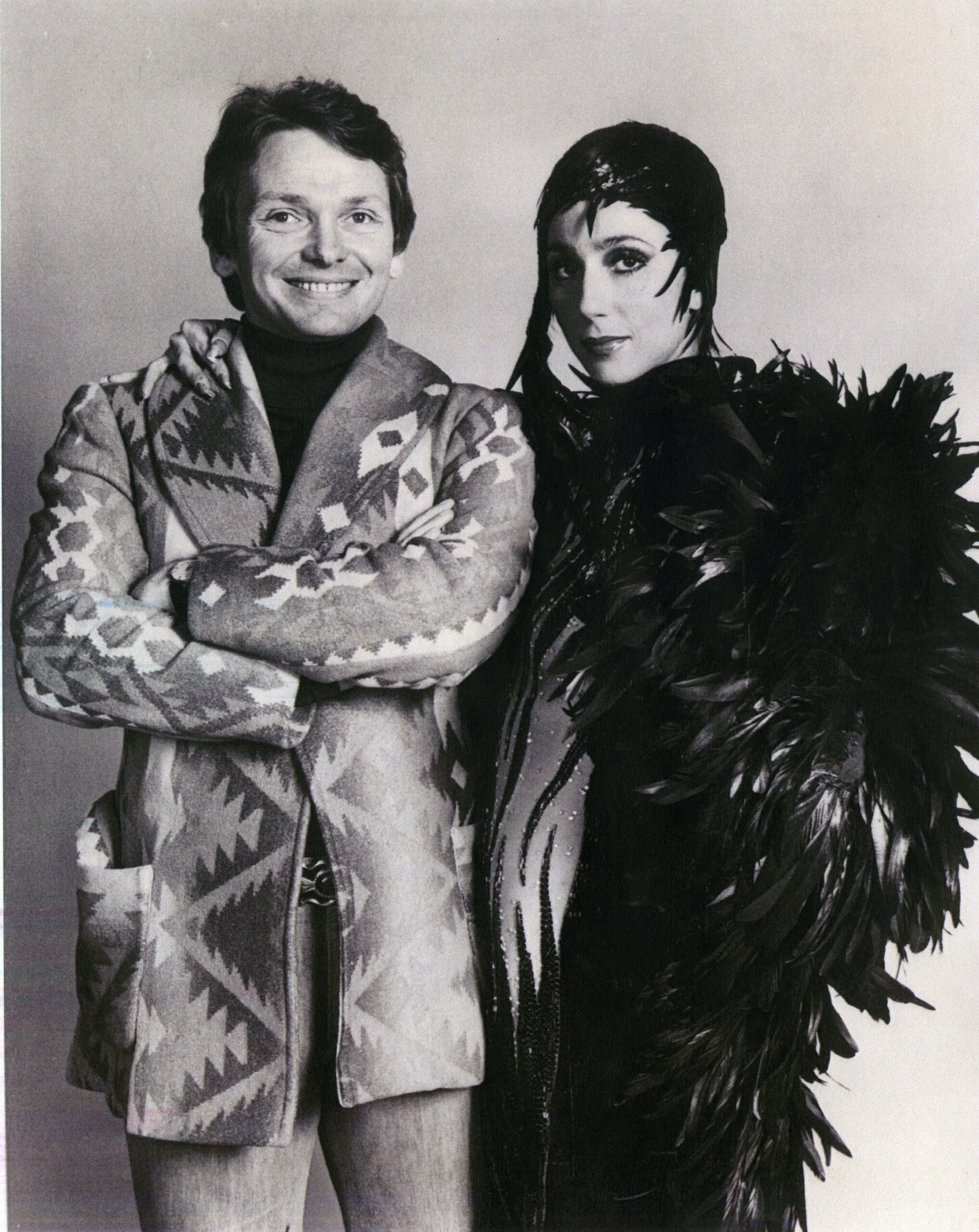
Then there was Cher. Their decades-long collaboration became one of the defining creative partnerships in entertainment, beginning before the visual identity now associated with Cher had fully taken shape. Through The Sonny & Cher Comedy Hour, her solo television career, concerts, awards shows and public appearances, Mackie created an endless series of sheer dresses, feathered headdresses, beaded gowns and barely there pieces that changed the possibilities of celebrity dressing. Their famous 1974 Met Gala look arrived years before the nearly naked dress became a red-carpet category of its own, while Cher’s enormous black feather headdress at the 1986 Academy Awards remains instantly recognizable four decades later. Mackie often treated skin almost like another material, drawing across the body with crystals, beads and embroidery rather than simply covering it. Yet his real talent was never the embellishment itself. He understood the person wearing it. Cher became more Cher in his clothes, just as Diana Ross became more Diana, Tina Turner more Tina and Elton John somehow made perfect sense performing in Central Park dressed as Donald Duck. Mackie knew how to dress a superstar because he knew when to exaggerate what was already there rather than inventing a new person underneath the clothes.
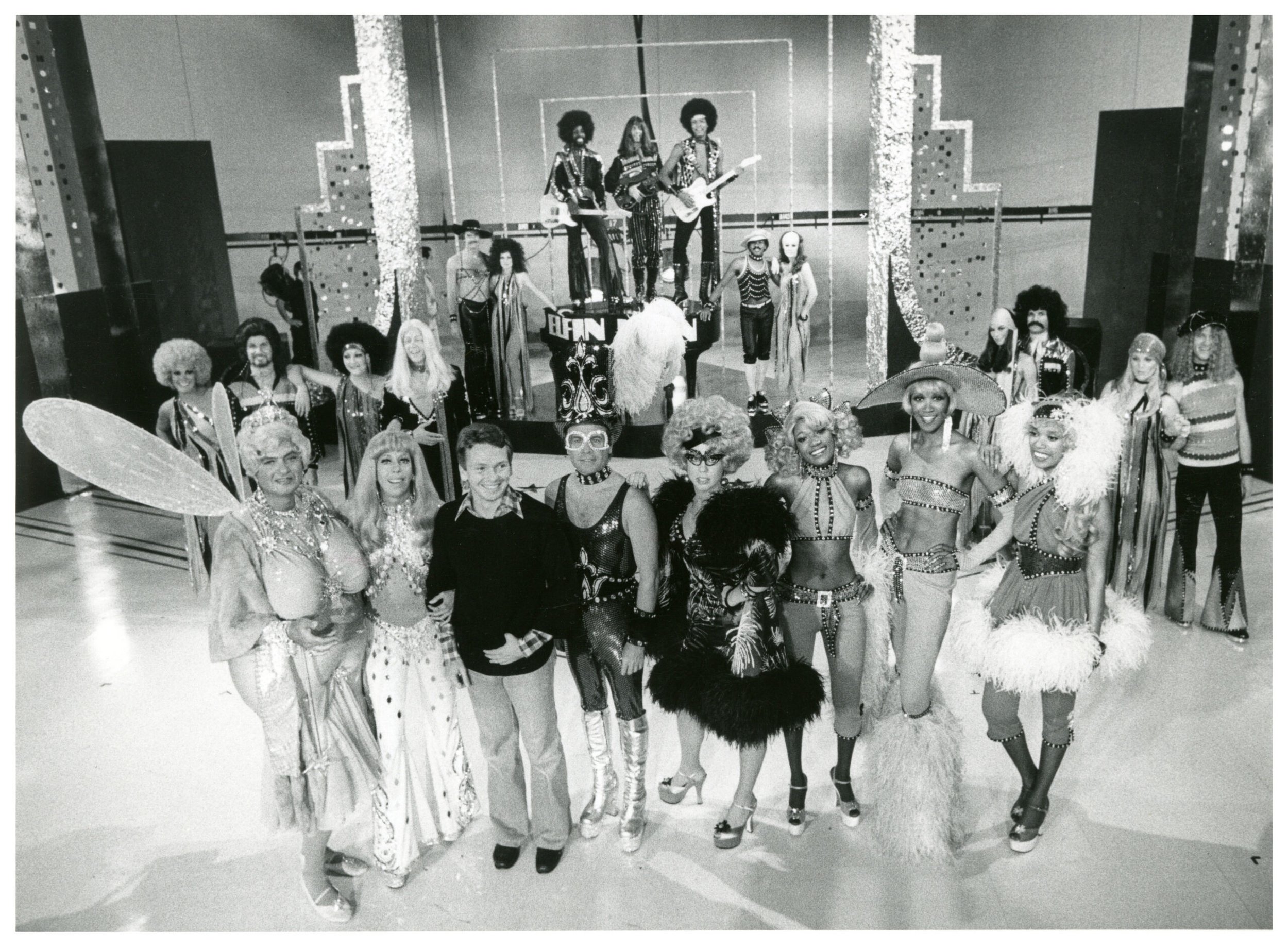
His career eventually stretched far beyond the television studios where it began. Mackie launched ready-to-wear in 1982, created collectible Barbie dolls, became a familiar presence on QVC and worked across film, Broadway, opera, ballet and live performance. He earned nine Emmys from 32 nominations, received three Academy Award nominations, entered the Television Academy Hall of Fame, received the CFDA’s Geoffrey Beene Lifetime Achievement Award and won his first Tony at 80 for The Cher Show. Younger generations eventually found their way into his archive too, with Miley Cyrus and Zendaya among those wearing his work, while pieces once created for television episodes and concert stages entered museums and major exhibitions. His influence became so embedded in pop culture that it is easy to see Mackie everywhere without realizing it. Crystal-covered bodysuits on stadium tours, sheer red-carpet dresses traced with embroidery, archival celebrity pulls and the idea that a pop star should have a visual identity as recognizable as their music all belong, at least partly, to a world he helped create.
What makes Mackie’s work feel particularly refreshing now is how little embarrassment there was around pleasure. He liked color, movement, beautiful bodies and things that sparkled beneath stage lights. He understood that someone could look incredibly chic while having fun with what they were wearing, and he never needed to make that instinct more serious than it was. At the same time, he could turn a curtain rod into one of television’s greatest jokes. That range is what gets lost when his career is reduced to beads, feathers and Cher. The materials were never the genius. Bob Mackie was. He knew who he was dressing, what made them interesting and exactly how far he could push them without allowing the clothes to swallow the person underneath. Mackie leaves behind thousands of drawings and costumes, countless famous images and a body of work that now lives comfortably inside both museums and popular memory, but his greatest legacy may be much simpler. For more than 60 years, he gave performers permission to be bigger, funnier, sexier, stranger and more completely themselves, and he understood better than almost anyone that if you were going to make an entrance, you might as well give people something worth remembering.