
Drew Henry Is The New Artistic Director at Courrèges
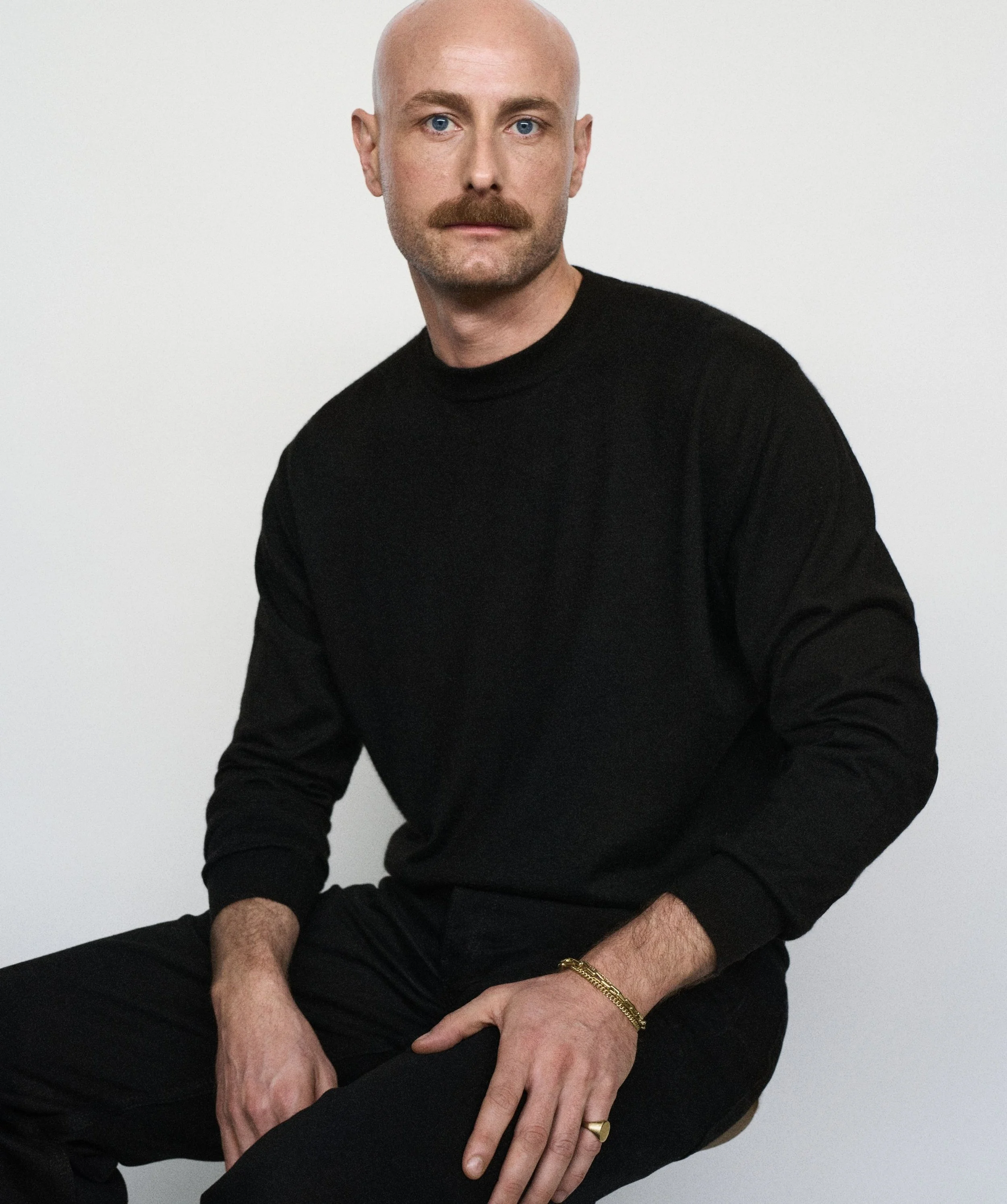
Photo via Courrèges/Jan Lehner
Courrèges has chosen Drew Henry to follow Nicolas Di Felice. What comes next could quietly reshape the house.
In fashion, timing is everything, but so is succession. At Courrèges, the two have converged in a moment that feels less like a routine appointment and more like a deliberate pivot. Just days after the departure of Nicolas Di Felice, a designer who not only revived the house but reshaped its cultural presence, the brand has named Drew Henry as its new artistic director. The decision, announced by Artémis, signals both continuity and recalibration. It does not reject Di Felice’s legacy, but instead moves the house toward what comes after it.
Henry, a South Africa born designer, arrives from Burberry, where he worked under Daniel Lee. His background reflects a quiet but substantial immersion in contemporary fashion, with training at Central Saint Martins and experience at Céline, JW Anderson, and alongside Phoebe Philo. It is the kind of résumé that signals fluency rather than fame. Henry is not yet a household name, but that mirrors the position Di Felice once occupied when he first took over in 2020. That parallel is difficult to ignore because it suggests that Courrèges is not seeking spectacle in its leadership, but precision.
To understand the weight of this transition, it helps to look at what Di Felice leaves behind. When he stepped into Courrèges, the house carried strong historical identity but lacked urgency in the present. Over five years, he transformed it into something immediate and culturally resonant. He reworked its Space Age heritage into a sharper, more physical language, blending vinyl, geometry, and minimalism with an undercurrent drawn from nightlife and youth culture. His shows became immersive environments rather than simple presentations, and his clothes evolved into a kind of uniform for a generation seeking both nostalgia and immediacy. As noted in the earlier Editaires article exploring his potential next move to Alaïa, his work at Courrèges was never just aesthetic. It was atmospheric. It changed how the brand felt as much as how it looked.
His departure, officially framed as a move toward personal projects, immediately triggered speculation. Among the strongest rumors is the possibility of his arrival at Alaïa, a house whose sculptural precision and focus on the body align naturally with his instincts. In that context, Henry’s appointment feels less like a rupture and more like a relay. The energy does not disappear, but it changes hands.
Henry’s approach is expected to differ in tone. Where Di Felice leaned into instinct, movement, and a certain nocturnal intensity, Henry appears positioned to bring clarity and structure. Early descriptions of his vision emphasize optimism and focus, suggesting a shift toward something more distilled. This contrast may be intentional. Fashion today is navigating a balance between cultural energy and commercial stability, and Henry’s experience at Burberry during a period of repositioning suggests he understands both dimensions. He is not stepping in to rebuild Courrèges from the ground up. He is stepping in to refine it.
Seen in a broader context, this appointment reflects a wider pattern across the industry. Increasingly, major houses are turning to designers who are deeply embedded within the system but not yet overexposed. These figures bring technical credibility and cultural awareness without the weight of an overdefined public persona. They allow brands to evolve without the disruption that comes with a complete reinvention. Courrèges, under Artémis, has demonstrated a particular sensitivity to this approach. The transition from Di Felice to Henry feels measured rather than reactive.
Henry will officially begin in May 2026. The period leading up to his debut will inevitably be filled with speculation, expectation, and analysis. The central question, however, remains straightforward. Can he sustain the momentum that has been built while guiding it somewhere new? The past five years suggest that Courrèges succeeds not by repeating itself, but by reinterpreting its identity through different creative perspectives. Henry’s task is not to surpass his predecessor. It is to adjust the frequency in a way that keeps the house recognizable, while making it feel newly relevant for what comes next.